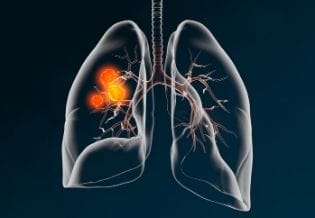
Submit Your Lung Cancer Epidemiology Research
Join leading epidemiologists advancing population health research through rigorous peer review and global open access dissemination
Two Convenient Submission Methods
Choose the submission pathway that best fits your workflow. Both methods ensure your epidemiological research receives expert evaluation from specialists in population health, disease surveillance, and statistical modeling.
ManuscriptZone Portal
Our comprehensive manuscript management system designed for epidemiological research. Track your submission from initial review through peer evaluation to publication.
- Auto-save functionality protects your work
- Real-time submission status tracking
- Direct access to reviewer comments
- Guided workflow for complex studies
- Secure file upload for large datasets
- Revision management tools
Best for: Population-based cohort studies, systematic reviews, meta-analyses, and manuscripts requiring multiple revisions.
Submit via ManuscriptZoneQuick Submission Form
Streamlined submission process for straightforward epidemiological manuscripts. No account creation required-submit your research in minutes.
- No registration required
- Simple one-page form
- Fast submission process
- Ideal for short communications
- Email confirmation provided
- Same rigorous peer review
Best for: Brief reports, outbreak investigations, commentaries, and letters to the editor.
Use Quick Submission FormBoth submission methods receive identical treatment: Expert peer review by epidemiologists, transparent editorial decisions, and the same publication timeline. Your choice depends solely on your preference for manuscript tracking and management features.
Epidemiological Research We Publish
The Journal of Lung Cancer Epidemiology welcomes rigorous population health research that advances our understanding of lung cancer patterns, risk factors, prevention strategies, and health outcomes. Our expert reviewers specialize in epidemiological methods and statistical approaches specific to cancer surveillance and population studies.
Population-Based Cohort Studies
Longitudinal investigations examining lung cancer incidence, mortality, and survival patterns across populations. Include exposure assessment, risk factor analysis, and temporal trends.
Systematic Reviews & Meta-Analyses
Comprehensive evidence synthesis following PRISMA guidelines. Quantitative pooling of epidemiological data on lung cancer risk factors, screening effectiveness, or intervention outcomes.
Case-Control Studies
Retrospective investigations of lung cancer risk factors, environmental exposures, occupational hazards, or genetic susceptibility. Emphasis on rigorous exposure assessment and confounder control.
Cancer Registry Analyses
Population-based surveillance studies using cancer registry data. Geographic variation, temporal trends, survival analysis, and health disparities research.
Screening & Early Detection Studies
Epidemiological evaluations of lung cancer screening programs, diagnostic test performance, and early detection strategies in population settings.
Health Services Research
Population-level studies of lung cancer care delivery, treatment patterns, healthcare access, quality of care, and health policy impacts.
Methodological Papers
Novel statistical methods, study design innovations, exposure assessment techniques, or analytical approaches for lung cancer epidemiology research.
Brief Reports & Short Communications
Preliminary findings, novel observations, or timely updates on emerging lung cancer trends. Rapid publication pathway for urgent public health findings.
Pre-Submission Checklist
Ensure your epidemiological manuscript meets our standards before submission. Complete manuscripts receive faster editorial screening and move more quickly to peer review.
Manuscript File
Word (.docx) or LaTeX format. Include structured abstract (Background, Methods, Results, Conclusions). Follow STROBE, PRISMA, or relevant reporting guidelines.
Figures & Tables
High-resolution figures (300 DPI minimum, TIFF or EPS preferred). Tables in editable format. Clear legends and captions for all visual elements.
Ethics Documentation
IRB/Ethics committee approval letter. Informed consent documentation for human subjects research. Data sharing statement if applicable.
Author Information
Complete author list with affiliations and ORCID IDs. Corresponding author contact details. Author contribution statements and competing interests declarations.
Cover Letter
Brief description of study significance. Statement of originality. Explanation of how your work advances lung cancer epidemiology. Suggested reviewers (optional).
Supplementary Materials
Additional data files, extended methods, supplementary tables/figures. Statistical code if applicable. Dataset documentation following FAIR principles.
Peer Review Timeline
We maintain transparent, predictable timelines for epidemiological manuscript evaluation. Our expert reviewers are active researchers in lung cancer epidemiology, biostatistics, and population health.
Submission
Upload via portal or quick form
Day 0Editorial Screening
Scope, ethics, quality check
3 daysPeer Review
Expert epidemiologist evaluation
21 daysEditorial Decision
Accept, revise, or reject
28 daysRevision (if needed)
Author response period
30 daysRe-review
Evaluation of revisions
14 daysProduction
Copyediting and typesetting
10 daysPublication
Online open access
~60 days totalFast-track option available: Urgent public health findings (outbreak investigations, emerging risk factors) can receive expedited 14-day review. Contact the editorial office when submitting to request fast-track consideration.
Why Epidemiologists Choose JLCE
Indexed in Major Databases
Google Scholar. Your research reaches epidemiologists, oncologists, and public health professionals worldwide.
Expert Epidemiologist Reviewers
Peer review by active researchers in cancer epidemiology, biostatistics, and population health. Constructive feedback improves manuscript quality.
Transparent Timeline
Average 21 days to first decision. Real-time status tracking. No hidden delays or unpredictable review processes.
Immediate Open Access
Published articles freely available worldwide upon acceptance. No embargo periods. Maximum research impact and citation potential.
COPE
Committee on Publication Ethics guidance. Rigorous ethical standards, transparent policies, and fair treatment of all authors.
APC Waivers Available
Financial support for researchers from low- and middle-income countries. Merit-based waivers for unfunded studies. No author excluded for financial reasons.
Manuscript Preparation Guidelines
Structure for Epidemiological Studies
Organize your manuscript following standard epidemiological reporting conventions:
- Title: Concise, informative. Include study design (cohort, case-control, cross-sectional).
- Abstract: Structured format (Background, Methods, Results, Conclusions). 250-300 words. Include key statistics (OR, RR, HR with 95% CI).
- Keywords: 5-8 terms. Use MeSH terms where applicable for indexing.
- Introduction: Research question, study rationale, specific aims. Brief literature review establishing knowledge gaps.
- Methods: Study design, population, sampling, exposure/outcome definitions, statistical analysis. Sufficient detail for replication. Report following STROBE guidelines.
- Results: Descriptive statistics, main findings, subgroup analyses. Present effect estimates with confidence intervals and p-values. Use tables and figures effectively.
- Discussion: Interpretation in context of existing literature. Strengths and limitations. Public health implications. Future research directions.
- References: Vancouver style. Include DOIs. Cite primary sources and recent literature.
Statistical Reporting Standards
Epidemiological manuscripts must include:
- Sample size justification or power calculation
- Description of statistical methods and software used
- Effect estimates with 95% confidence intervals
- P-values reported to appropriate precision
- Handling of missing data clearly described
- Adjustment for confounders and rationale
- Sensitivity analyses for key assumptions
Data Availability
We encourage data sharing to promote reproducibility. Options include:
- Deposit in public repository (Dryad, Figshare, OSF)
- Supplementary data files with manuscript
- Data available upon reasonable request (with justification)
- For sensitive health data: synthetic datasets or detailed documentation
Ethical Considerations for Epidemiological Research
Human Subjects Research
All population-based studies involving human participants require:
- IRB/Ethics committee approval from all participating institutions
- Informed consent documentation (or waiver justification)
- Privacy protection measures for individual-level data
- Compliance with HIPAA, GDPR, or local data protection regulations
- Statement of ethical approval in Methods section
Registry and Administrative Data
Studies using cancer registries or health system data must document:
- Data access agreements and permissions
- De-identification procedures
- Compliance with registry-specific reporting requirements
- Acknowledgment of data sources
Competing Interests
Declare all potential conflicts including:
- Financial relationships with industry (tobacco, pharmaceutical)
- Research funding sources
- Employment or consulting relationships
- Patents or intellectual property
- Personal relationships that could influence interpretation
After Submission: What to Expect
Editorial Screening (Days 1-3)
Our editorial team evaluates:
- Scope alignment with lung cancer epidemiology
- Methodological rigor and study design appropriateness
- Ethical compliance and documentation completeness
- Manuscript formatting and completeness
- Plagiarism screening (iThenticate, <30% similarity threshold)
Peer Review Process (Days 4-28)
Manuscripts passing editorial screening are sent to 2-3 expert reviewers:
- Reviewers selected based on epidemiological expertise and study topic
- Single-blind review (author and reviewer identities concealed)
- Reviewers evaluate scientific rigor, methodology, interpretation, and significance
- Constructive feedback provided to improve manuscript quality
- Average 21 days to receive all reviewer reports
Editorial Decision
Based on reviewer recommendations, editors make one of four decisions:
- Accept: Manuscript accepted with minor editorial changes only
- Minor Revisions: Small changes required, no additional review needed
- Major Revisions: Substantial changes required, re-review by original reviewers
- Reject: Manuscript does not meet publication standards or scope
Revision and Resubmission
If revisions are requested:
- You have 30 days to submit revised manuscript (extensions available)
- Provide point-by-point response to reviewer comments
- Highlight changes in revised manuscript
- Revised manuscripts undergo expedited re-review (14 days average)
- Most revised manuscripts are accepted after addressing reviewer concerns
Publication Process
Accepted manuscripts move to production:
- Professional copyediting for clarity and grammar
- Typesetting in journal format (HTML and PDF)
- Author proof review (48-hour turnaround requested)
- DOI assignment and metadata registration
- Publication in next available issue (continuous online publication)
- Immediate indexing in and other databases
Need Assistance?
Our editorial team is here to support you throughout the submission and review process. For technical questions, submission guidance, or general inquiries, contact us at [email protected]
Ready to share your lung cancer epidemiology research with the global scientific community?
Submit Your Manuscript Today