
Prevalence and Risk Factors of Intestinal Parasitic Helminths among Primary School Children in Oru West Lga, Imo State, Nigeria

Abstract
Intestinal parasitic helminths pose a significant public health burden, particularly among children. This cross-sectional study investigated the prevalence and risk factors of intestinal parasitic helminths among 550 school children aged 4-12 years in Oru-West L.G.A, Imo State, Nigeria. Stool samples were examined using parasitological techniques, and questionnaires were administered to collect data on risk factors. The overall prevalence of intestinal parasitic helminths was 49.1% (270/550), with Ascaris lumbricoides being the most prevalent (30.37%). Multivariate analysis revealed significant associations between intestinal parasitic helminths and lack of hand-washing, insufficient toilet facilities, consumption of unwashed vegetables, and poor environmental sanitation. Males had a significantly higher infection rate than females (P < 0.05). Age-related prevalence was highest among children aged 4-6 (51.85%). Occupational status and educational level of parents were also significant predictors of infection. These findings highlight the need for public health education, provision of basic sanitation facilities, and regular de-worming as preventive measures.
Article Information
- Received
- Accepted
- Published
Academic Editor: Andrei Alimov, Associate Professor Research Center for Medical Genetics, Moscow, Russia
Checked for plagiarism: Yes
Review by: Single-blind
Copyright © 2025 Onwuka Chigozie Divine.
 This is an open-access article distributed under the terms of the Creative Commons Attribution License, which permits unrestricted use, distribution, and reproduction in any medium, provided the original author and source are credited.
Corresponding author: Onwuka Chigozie Divine, Department of Zoology, Imo State University Owerri PMB 2000 —
Competing Interests
The authors declare that they have no known competing financial interests or personal relationships that could have appeared to influence the work reported in this paper.
Funding
No specific funding statement was provided by the authors.
Data Availability
No data-availability statement was provided by the authors.
Citation:
Introduction
Intestinal parasitic infections are a pervasive and neglected public health issue, disproportionately affecting children in developing countries. Despite their significant impact, intestinal parasitic infections remain poorly understood, particularly in Nigeria, where they are endemic 1, 2. The vulnerability of children to intestinal parasitic infections is well-documented, with high prevalence rates reported in Nigeria 3, 4, 5, 6, 7, 8, 9. Globally, intestinal parasitic infections affect an estimated 3.5 billion people, with 400 million school-age children infected, resulting in physical and mental impairment, attention deficits, and learning disabilities 11.
Poor sanitation, inadequate access to clean water, and limited health education facilitate the transmission of intestinal parasitic infections 10. In Nigeria, the prevalence of intestinal parasitic infections among children is exacerbated by poverty, weak environmental sanitation, and a lack of sufficient public knowledge 13. The school environment has emerged as a critical epidemiological focus in childhood parasitism, with factors such as poor sanitary conditions, unhygienic practices, and behavioral aberrations contributing to the persistence of intestinal parasitic infections 15, 16, 17, 18, 19, 20.
The World Health Organization recommends that a baseline study be performed on school children to assess the prevalence of worm infestation before any worm control program is implemented and survey treatment should be given 23. In Nigeria, there is currently no national school-based intestinal parasitic control program. Sporadic and uncoordinated de-worming initiatives have been initiated by philanthropists and NGOs in the past. NGOs like "De-worm the World Initiative" have partnered with governments to eliminate the public health threat of worms through school-based mass de-worming programs. This initiative has tremendously targeted all at-risk school-age children and has achieved over 75% success.
Risk factors that have been identified as responsible for the continued persistence of intestinal parasites in children are poor sanitary conditions, unhygienic practices, poor housing, and poverty 16, 17, 15. Also, some behavioral aberrations such as nail-biting, finger sucking, have been postulated as important risk factors that may encourage soil contamination by helminths ova and intestinal parasitic transmission from one individual to another 18, 19, 20 the effects of parasitic infections in children are adverse and disturbing. These infections are known to trigger immune responses in man and present problems for the body's ability to fight disease, thus making affected individuals more prone to co-infection 20, 1.
Continuous assessment of the prevalence of intestinal parasitic infections among schoolchildren is important, in line with the WHO guideline, as they are the most likely at risk of constant infection. This is because parasitic diseases are prevalent in developing countries and, due to their effect on both the nutritional and immune status of the population, pose a significant health risk 24. While several studies on the prevalence of intestinal parasites in Nigeria have been carried out 25, 26, 27, there are several populations for which there is no epidemiological information accessible, like Oru-West Local Government Area. The objective of this study was to determine the prevalence of the distribution of intestinal parasitic infection among primary schools and associated risk factors in the Oru-West Local Government Area, in Imo State, Nigeria. The findings of this study will contribute to the development of evidence-based public health initiatives and strategic programs to control the spread of intestinal parasitic infections among children in Nigeria.
Materials and Methods
Study Area
This study was conducted in Oru-West Local Government Area (LGA), located in Imo State, South-Eastern Nigeria (Figure 21). Oru-West LGA has a total area of 93 km2 and a projected population of 159,300 between 2016 and 2021, according to the National Bureau of Statistics (NBS) and the Bureau of Statistics (BS). The headquarters of Oru-West LGA is situated in Mgbidi city, which is geographically located at 5.37°N latitude and 6.57°E longitude.
Figure 2.1.Map of Imo State 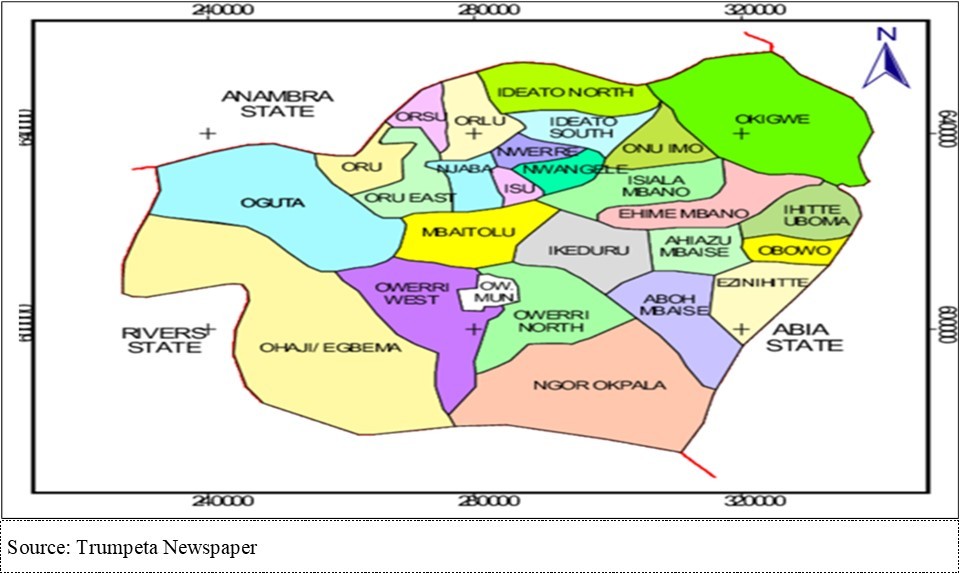
Download figure
Oru-West LGA shares borders with several neighboring LGAs, including Ibi-Asoegbe and Aji to the north, Amiri and Otulu to the east, Ozara to the west, and Oguta LGA and Awo-mamma to the south. The Awbana River, which flows into Oguta Lake, is a notable geographical feature of the area.
The study area is characterized by a mix of urban and rural communities, with a significant proportion of the population residing in rural areas. The majority of the population relies on rivers and streams for their water supply, which is used for domestic and agricultural purposes. The local economy is driven by activities such as trade, craftsmanship, fishing, and civil service.
However, the study area is also marked by poor sanitary conditions, with many schools and communities lacking access to proper toilet facilities and water supply. The use of pit-latrine and bush defecation is common, contributing to the prevalence of intestinal parasitic infections in the area.
Study Design and Data Collection
This cross-sectional, school-based study was conducted from June 2033 to January 2024 in Oru-West Local Government Area, Imo State, Nigeria. A systematic sampling technique was employed to select 550 schoolchildren from eight randomly chosen schools.
A structured, face-validated questionnaire was administered to the participants to gather data on demographic characteristics, sanitation practices, and other relevant factors. The questionnaire was pre-tested among 40 schoolchildren in Ndegwu, a community outside the study area, to ensure its validity and reliability.
The inclusion criteria for the study were school children aged four years and above. Children under four years old were excluded. Parents or primary caregivers of participating children who provided stool samples were also interviewed to gather additional information.
Data collection was conducted through face-to-face interviews with the participants, and stool samples were collected from consenting children. The interviews were conducted in a private setting to ensure confidentiality and minimize bias.
Sample Size Determination
The sample size for this study was determined using a single population proportion formula. This formula is used to estimate the required sample size to compare a proportion of responses or values in sample data to a hypothesized proportion in the population.
The formula used was:
n = (Zα/2) ^2 * p * (1-p) / E^2
Where:
n = sample size
Zα/2 = critical value of the Normal distribution at α/2 (95% confidence level)
p = sample proportion (estimated to be 0.5 for maximum variability)
E = margin of error (5%)
Substituting the values, we get:
n = (1.96) ^2 * 0.5 * (1-0.5) / (0.05) ^2
n = 494.16
To account for a 10% non-response rate, the sample size was inflated to:
n = 494.16 / 0.9
n = 549.06
Rounding up to the nearest whole number, a sample size of 550 was determined to ensure adequate power and precision for the study.
Sample Collection and Analysis
Stool samples were collected from pupils in selected primary schools using a standardized protocol. Participants were provided with a pre-labeled plastic container containing their name, sex, and age, and equipped with a press seal and attached spatula. Clear instructions were provided to participants on how to collect the stool sample, which involved depositing a small portion of the stool into the container early in the morning. The samples were then transported to the Imo State University Owerri Department of Animal and Environmental Biology Laboratory for analysis.
All samples were processed on the same day of collection. Samples that were not immediately analyzed were stored in a refrigerator at 4°C to preserve integrity. Before laboratory analysis, each stool sample underwent a visual inspection to record its physical characteristics, including shape, color, consistency, and the presence or absence of blood, mucus, and pus.
Parasitological Examination
The parasitological examination of stool samples was conducted using the formol-ether concentration method (Cheesbrough, 2005). This technique is a widely accepted and effective method for detecting and identifying intestinal parasites.
The examination process involved a two-step approach. First, a direct saline preparation was used to conduct a preliminary examination of stool samples for the presence of ova, larvae, and cysts of intestinal parasites. Subsequently, the formol-ether concentration method was employed to confirm the presence and identify the species of intestinal parasites present in the stool samples.
Concentration Method
The formol-ether concentration technique was employed to concentrate parasites and their eggs in stool samples. Briefly, 2g of stool sample was emulsified with 10 ml of normal saline to form a suspension. The suspension was then centrifuged at 1,000 rpm for 1 minute, and the supernatant was discarded.
A 4ml aliquot of 10% formol solution was added to the deposit, and the mixture was allowed to stand for 5 minutes. Subsequently, 4 ml of diethyl ether was added, and the mixture was vigorously shaken and centrifuged at 1,000 rpm for 2 minutes.
The fecal debris was removed, and the supernatant was discarded, leaving the deposit. A drop of the deposit was applied to a microscope slide, mixed with Lugol's iodine, covered with a cover slip, and examined under a light microscope using X10 and X40 objectives.
A total of six slide samples were evaluated for each stool sample. Intestinal parasite eggs and larvae were identified using standard taxonomic keys.
Data Analysis
Statistical analysis was performed using IBM SPSS Statistics for Windows, Version 16.0. Descriptive statistics were calculated to summarize the characteristics of the study population. Bivariate logistic regression analysis was employed to assess the associations between independent variables and outcome variables.
The significance of correlations between variables was determined using chi-squared tests, with P-values calculated accordingly. A P-value of < 0.05 was considered statistically significant. Multivariate logistic regression analysis was performed for variables with a P-value of < 0.05 in the bivariate analysis.
The chi-squared test, a non-parametric test, was used to examine the associations between categorical variables. Contingency tables were constructed to classify data based on two categorical variables. The chi-squared statistic (X2) was calculated as (O - E)2, where O represents the observed frequency and E represents the expected frequency.
The degree of freedom (Df) was calculated to ensure the statistical validity of the chi-squared tests.
Ethical Consideration
This study obtained ethical approval from the Department of Animal and Environmental Biology, Imo State University Owerri, and Imo State Universal Basic Education Board (Protocol 9765) in March 2024. Written informed consent was secured through the Parents-Teachers Association from parents/guardians of the subjects, ensuring they understood the research's benefits, including alerting the government and stakeholders to the pupils' health status and potential mass treatment.
To accommodate varying literacy levels, consent was obtained verbally through an interpreter familiar with the local dialect. This approach ensured that parents/guardians aged 15 and above, who could read and write, provided informed consent. Notably, no medical treatment was offered to the children during the study, as the school management declined treatment options.
This study adhered to ethical principles, including voluntary participation, informed consent, and confidentiality, as outlined in research ethics guidelines.
Results
Prevalence of Gastrointestinal Parasites in Schools across Different Locations
A total of 550 stool samples were examined, revealing an overall prevalence of gastrointestinal parasites of 49.1% (n = 270). The prevalence varied significantly across different school locations (χ2 = 7.62, p < 0.05).
The highest prevalence was observed in Progressive Central School Otulu (17.8%, n = 48), followed by Central School Ubulu (15.9%, n = 43) and Unique Group of Schools (15.2%, n = 41). In contrast, the lowest prevalence was recorded in Marianum Academy (7.4%, n = 20).
The prevalence of gastrointestinal parasites also differed by school location. Rural schools had a higher prevalence (16.4% - 15.9%) compared to peri-urban (12.6% - 8.9%) and urban schools (7.8% - 7.4%). These findings suggest that school location is a significant factor influencing the prevalence of gastrointestinal parasites among school children.
The spatial distribution of the schools revealed that four schools (Central School, Community Primary School, Unique Group of Schools, and Progressive Central School) are situated in rural communities, approximately 10 km from Mgbidi City. In contrast, two schools (All Blessed Basic School and Mbachu Primary School) are located in peri-urban areas, about 4 km from the city. The remaining two schools (Marianum Academy and Ray Jacob Primary School) are situated near Mgbidi City. (Table 31)
Table 3.1. Prevalence of Gastrointestinal Parasites in Schools Across Different Locations| Schools | Number Examined (n=550) (%) Number Positive Infection | Number Infected (n=270) (%) Number Positive Infection | Location of Schools | Chi-Square P-V |
| Central School Ubulu | 82(14.9) | 43(15.9) | Rural | |
| Community Primary School | 80(14.5) | 40(14.8) | Rural | 7.62 |
| All blessed Basic School. | 62(11.3 | 34(12.6) | Peri-Urban | |
| Marianum Academy | 50(9.1) | 20(7.4) | Urban | |
| Ray Jacob Primary School | 48(8.7) | 21(7.8) | Urban | |
| Unique Group of Schools | 78(14.2) | 41(15.2) | Rural | |
| Progressive Central School Otulu | 90(16.4) | 48(17.8) | Rural | |
| Mbachu Primary School | 60(10.9) | 24(8.9) | Peri-Urban | |
| TOTAL | 550 | 270(49.1) |
These findings suggest that school location is a significant factor influencing the prevalence of gastrointestinal parasites among schoolchildren. The higher prevalence of gastrointestinal parasites in rural schools highlights the need for targeted interventions, such as improved sanitation and hygiene practices, to reduce the burden of these parasites in these communities.
Distribution of Gastrointestinal Parasites among Schools in the Study Area
A total of 550 stool samples were examined, revealing a diverse range of gastrointestinal parasites across the different schools. The most prevalent parasites were: Ascaris lumbricoides (30.37%), Hookworm (22.22%), Entamoeba histolytica (15.93%), Strongyloides stercoralis (11.11%), Taenia species (7.78%) and, Trichuris trichiura (11.48%).
The distribution of parasites varied significantly across the different schools (p < 0.05). The highest prevalence of Ascaris lumbricoides was observed in Central School (41.86%), while Hookworm was most prevalent in Community Primary School (27.5%). Entamoeba histolytica was most commonly detected in the Unique Group of Schools (17.65%). The Chi-Square analysis showed that the prevalence of parasites differed significantly (χ2 = 25.66; Df = 2, P < 0.05)) (Table 32).
Table 3. 2. Distribution of Gastrointestinal parasites in Schools in the study area.| Schools Parasites Examined | CNS (n =82) (%) Infected | CPS (n =80) (%) Infected | ABBS (n =62) (%) Infected | MA (n=50) (%) Infected | RJPS (n=48) (%) Infected | UGS (n=78) (%) Infected | PCO (n=90) (%) Infected | MPS (n=60) (%) Infected | TOTAL (n=550) (%) Number positive Infection |
| Ascaris Lumbricoides | 18(41.86) | 8(20.0) | 10(29.41 | 6(30.00) | 7(33.33) | 10(24.39) | 14(29.17) | 7(29.12) | 82(30.37) |
| Entamoeba Histolytica | 5(11.63) | 6(15.0) | 6(17.65) | 5(15.00) | 3(14.29) | 8(19.51) | 10(20.83) | 3(12.50) | 43(15.93) |
| Strongyloides Stercoralis | 1(2.33) | 3(7.5) | 2(5.88) | 1(5.00) | 1(4.76) | 2(4.88) | 4(8.33) | 1(4.17) | 30(11.11) |
| Hookworm | 10(23.26) | 11(27.5) | 8(23.53) | 7(35.00) | 6(28.57) | 12(29.27) | 12(25.00) | 8(33.33) | 63(22.22) |
| Taenia species | 4(9.30) | 3(7.5) | 2(5.88) | 1(5.00) | 0.(0.00) | 4(9.76) | 2(4.17) | 2(8.33) | 21(7.78) |
| Trichiura Trichuris | 5(11.62) | 9(22.5) | 6(17.65) | 2(10.00) | 4(19.05) | 5(12.2) | 6(12.50) | 3(12.55) | 31(11.48) |
| TOTAL (Number infected) | 43(15.9) | 40(14.8) | 34(12.6) | 20(7.4) | 21(7.8) | 41(15.2) | 48(17.8) | 23(8.5) | 270(49.1) |
These findings highlight the need for targeted interventions to control the spread of gastrointestinal parasites in these communities.
Table 2: Legend:
Abbreviations
CNS: Central School, Ubulu
CPS: Community Primary School
ABBS: All Blessed Basic School
MA: Marianum Academy
RJPS: Ray Jacob Primary School
UGS: Unique Group of Schools
PCO: Progressive Central School Otulu
MPS: Mbachu Primary School
Note
The "TOTAL" row represents the cumulative number of participants infected with at least one intestinal parasite, highlighting the overall burden of gastrointestinal parasitic infections in the study population.
Age-Specific Distribution of Gastrointestinal Parasites among Pupils
A total of 550 pupils were examined for gastrointestinal parasites, revealing significant age-related variations in parasite distribution (χ2 = 7.62, p = 0.02).
The highest prevalence of Ascaris lumbricoides was observed among pupils aged 4-6 years (37.14%), followed by those aged 10-12 years (36.36%). Entamoeba histolytica was most prevalent among pupils aged 7-9 years (20.93%). Hookworm infections were consistently high across all age groups, ranging from 21.42% to 23.70%.
In contrast, the prevalence of Strongyloides stercoralis and Taenia species was relatively low across all age groups. Trichuris trichiura infections were most common among pupils aged 4-6 years (14.29%). The Chi-Square analysis revealed that there was a substantial difference between different age groups in the frequency of intestinal parasites (χ2 = 7.62; D.f = 2, P<0.02). (Table 33)
Table 3.3. Distribution of Gastrointestinal Parasite concerning Age of Pupils in Schools| Age Groups | 4-6 (n=258) Number positive Infection (%) | 7-9 (n=150) Number positive Infection (%) | 10-12 (n=142) Number positive Infection (%) | Total (n=550) Number Infection (%) | Chi-Square | P-value |
|---|---|---|---|---|---|---|
| Parasites Examined | ||||||
| Ascaris lumbricoides | 52(37.14) | 26(30.23) | 16(36.36) | 100(37.03) | ||
| Entamoeba histolytica | 24(17.14) | 18(20.93) | 9(20.45) | 36(13.33) | 7.62 | 2 |
| Strongyloides stercoralis | 6(4.29) | 6(6.98) | 2(4.55) | 8(2.96) | ||
| Hookworm | 30(21.42) | 20(23.26) | 10(22.72) | 64(23.70) | ||
| Taenia Species | 8(5.71) | 7(8.14) | 2(4.55) | 50(18.52) | ||
| Trichuris trichiura | 20(14.29) | 9(10.47) | 5(11.36) | 12(4.44) | ||
| TOTAL | 140(51.85) | 86(31.85) | 44(16.29) | 270(49.09) |
These age-specific patterns of gastrointestinal parasite distribution have important implications for targeted interventions and public health strategies.
Sex-Specific Distribution of Gastrointestinal Parasites among Pupils
A total of 550 pupils were examined for gastrointestinal parasites, revealing significant sex-related variations in parasite distribution (χ2 = 7.14, p = 0.02).
The prevalence of Ascaris lumbricoides was slightly higher among female pupils (37.50%) compared to male pupils (34.67%). In contrast, the prevalence of Hookworm was higher among male pupils (24.00%) compared to female pupils (26.67%). Entamoeba histolytica infections were more common among male pupils (20.00%) than female pupils (16.67%).
The prevalence of Strongyloides stercoralis, Taenia species, and Trichuris trichiura was relatively low among both male and female pupils. Table 34
Table 3.4. Distribution of Gastrointestinal Parasites concerning Sex of Pupils in the study Area| Sex-Groups | Male (n=290) Number Positive Infection (%) | Female (n=260) Number Positive Infection (%) | Total (n=550) Number Positive Infection (%) | Chi- Sq | P- Value |
| Parasites Examined | |||||
| Ascaris lumbricoides | 52(34.67) | 45(37.50) | 96(35.56) | ||
| Entamoeba histolytic | 30(20.00) | 20(16.67) | 35(12.96) | ||
| Strongyloides stercoralis | 8(5.33) | 5(4.17) | 10(3.70) | 7.14 | 2 |
| Hookworm | 36(24.00) | 32(26.67) | 64(23.70) | ||
| Taenia species | 6(4.00) | 4(3.33) | 13(4.81) | ||
| Trichuris trichiura | 18(12.00) | 14(11.67) | 52(19.26) | ||
| TOTAL | 150(55.56) | 120(44.44) | 270(49.09) |
Associations between Socio-Demographic Characteristics and Prevalence of Gastrointestinal Parasites among Primary School Pupils
A total of 550 pupils were examined for gastrointestinal parasites, revealing significant associations between socio-demographic characteristics and parasite prevalence.
Sex
Male pupils had a higher prevalence of infection (55.56%) compared to female pupils (44.44%), although this difference was not statistically significant (χ2 = 0.556, p = 0.457).
Age Groups
Pupils aged 4-6 years had the highest prevalence of infection (51.85%), followed by those aged 7-9 years (31.85%) and 10-12 years (16.29%) (χ2 = 9.802, p < 0.01).
Schools
Significant variations in parasite prevalence were observed across different schools (χ2 = 7.858, p < 0.01), with the highest prevalence recorded in Progressive Central School Otulu (17.8%) and the lowest in Marianum Academy (7.4%).
Educational Status of Guardians/Parents
A significant association was observed between the educational status of guardians/parents and parasite prevalence (χ2 = 37.834, p < 0.01), with pupils whose guardians/parents had secondary education having a higher prevalence of infection (71.85%) compared to those with post-secondary education (28.15%).
Marital Status of Parents/Guardians
No significant association was observed between the marital status of parents/guardians and parasite prevalence (χ2 = 0.532, p = 0.466).
Occupational Status of Parents/Guardians
A significant association was observed between the occupational status of parents/guardians and parasite prevalence (χ2 = 26.538, p < 0.01), with pupils whose parents/guardians were farmers having a higher prevalence of infection (29.63%) compared to those in other occupations. Table 35
Table 3.5. Associations between Socio-Demographic Characteristics and Prevalence of Gastrointestinal Parasites among Primary School Pupils| Variables | Total Number of pupils (%) | Number Infected (%) | Chi-Square | P-value |
| Sex Status | ||||
| Male | 290(52.72) | 150(55.56) | ||
| Female | 260(47.27) | 120(44.44) | 0.556 | 2 |
| Total | 550 | 270(49.09) | ||
| Age Groups | ||||
| 4-6 | 258(46.91) | 140(51.85) | ||
| 7-9 | 150(27.27) | 86(31.85) | 9.802 | 2 |
| 10-12 | 142(25.82) | 44(16.29) | ||
| Total | 550 | 270(49.09) | ||
| Schools | ||||
| Central School, Ubulu | 82(14.9) | 43(15.9) | ||
| Community Primary School | 80(14.5) | 40(14.8) | ||
| All Blessed Basic School | 62(11.3) | 34(12.6) | ||
| Marianum Academy | 50(9.11) | 20(7.4) | 7.858 | 2 |
| Ray Jacob Primary School | 48(8.70) | 21(7.8) | ||
| Unique Group of Schools | 78(14.2) | 41(15.2) | ||
| Progressive Central School Otulu | 90(16.4) | 48(17.8) | ||
| Mbachu Primary School | 60(10.9) | 24(8.9) | ||
| Total | 550 | 270(49.09) | ||
| Educational Status of the Guardians/parents | ||||
| Secondary Education | 340(61.82) | 194(71.85) | ||
| Post-Secondary Education | 210(38.18) | 76(28.15) | 37.834 | < 0.01 |
| Total | 550 | 270(49.09) | ||
| Marital Status of the Parents/ Guardians | ||||
| Married | 416(75.64) | 200(74.07) | 2 | |
| Not married | 134(24.36) | 70(25.93) | 0.532 | |
| Total | 550 | 270(49.09) | ||
| Occupational Status of Parents/guardians | ||||
| Traders | 140(25.45) | 63(23.33) | ||
| Farmers | 200(36.36) | 80(29.63) | 26.538 | < 0.01 |
| Laborers Artisans | 53(9.64) 50(9.09) | 43(15.93) 44(16.29) | ||
| Civil Servants | 107(19.45) | 40(14.81) | ||
| Total | 550 | 270(49.09) |
These findings highlight the importance of socio-demographic factors in determining the prevalence of gastrointestinal parasites among primary school pupils.
Behavioral, Attitudinal, and Environmental Risk Factors Associated with Gastrointestinal Parasites among Primary School Children
A total of 550 primary school children were examined for gastrointestinal parasites, revealing significant associations between various behavioral, attitudinal, and environmental risk factors and parasite prevalence.
Toilet Facilities
Children who used pit latrines at school had a higher prevalence of infection (47.41%) compared to those who used water systems (28.89%) (χ2 = 5.280, p = 0.20). Similarly, children who used pit latrines at home had a higher prevalence of infection (29.63%) compared to those who used water systems (55.56%) (χ2 = 6.424, p = 0.14).
Hand Hygiene
Children who did not wash their hands after using the toilet had a higher prevalence of infection (60.74%) compared to those who did (39.26%) (χ2 = 2.0489, p = 0.12). Also, children who did not wash their hands before eating had a higher prevalence of infection (76.29%) compared to those who did (23.70%).
Food Hygiene
Children who did not wash vegetables before eating had a higher prevalence of infection (58.52%) compared to those who did (41.48%) (χ2 = 13.139, p = 0.02).
Waste Disposal
Children who used polythene bags for waste disposal had a lower prevalence of infection (38.52%) compared to those who did not use a waste bin (61.48%) (χ2 = 14.0988, p = 0.02).
Drinking Water
Children who drank water from rivers had a higher prevalence of infection (62.96 %) compared to those who drank water from boreholes (37.04%) (χ2 = 6.4256, p = 0.14).
Residence
Children who lived in public compounds had a higher prevalence of infection (79.25%) compared to those who lived in self-compounds (20.75%) (χ2 = 102.844, p < 0.01). Table 36
Table 3.6. Behavioral, Attitudinal, and Environmental Risk Factors Associated with Gastrointestinal Parasites among Primary School Children| Variables | Number of Respondents (%) | No. Infected (%) | Chi-square | P-value |
| Toilet Facilities Used at School | ||||
| Pit Latrine | 245(44.55) | 128(47.41) | ||
| Surrounding Bush | 80(14.55) | 64(23.70) | 5.280 | 0.20 |
| Water System | 225(40.91) | 78(28.89) | ||
| Total | 550 | 270(41.09) | ||
| Toilet Facilities Used at Home | ||||
| Pit Latrine | 280(36.36) | 80(29.6.3) | ||
| Surrounding Bush | 70(12.73) | 40(14.81) | ||
| Water System | 280(50.91) | 150(55.56) | 6.424 | 0.14 |
| Total | 550 | 270(49.09) | ||
| Hand washing after using the toilet | ||||
| Yes | 264(48.00) | 106(39.26) | ||
| No | 286(52.00) | 164(60.74) | 2.0489 | 0.12 |
| Total | 550 | 270(49.09) | ||
| Hand washing before eating | ||||
| Yes | 68(12.36.) | 64(23.70) | ||
| No | 482(87.64) | 206(76.29) | ||
| Total | 550 | 270(49.09) | ||
| Washing of vegetables before eating | ||||
| Yes | 394(71.64) | 158(58.52) | ||
| No | 156(28.36) | 112(41.48) | 13.139 | 0.02 |
| Total | 550 | 270(49.09) | ||
| Often wearing shoes. | ||||
| Yes | 310(56.36) | 142(52.59) | ||
| No | 240(43.64) | 128(47.41) | 1.108 | 0.92 |
| Total | 550 | 270(49.09) | ||
| Type of waste disposal system used | ||||
| Polythene bags | 288(52.36) | 104(38.52) | ||
| No waste bin | 262(47.64) | 166(61.48) | 14.0988 | 0.02 |
| Total | 550 | 270(49.09) | ||
|---|---|---|---|---|
| Sources of Drinking water | ||||
| River | 152(27.64) | 100(37.04) | ||
| Borehole | 398(72.36) | 170(62.96) | 6.4256 | 0.14 |
| Total | 550 | 270(49.09) | ||
| Nature of House Floor | ||||
| Concrete | 470(85.45) | 228(84.44) | ||
| Mud | 80(14.55) | 42(15.56) | ||
| Total | 550 | 270(49.09) | ||
| Nature of Building Roof | ||||
| Zinc or Aluminum | 518(94.18) | 238(88.15) | ||
| Thatch roof | 32(5.82) | 32(11.85) | 3.652 | 0.36 |
| Total | 550 | 270(49.09) | ||
| Nature of Residence | ||||
| Self compound | 234(42.55) | 56(20.75) | ||
| Public compound | 316(57.45) | 214(79.25) | 102.844 | <0.01 |
| Total | 550 | 270(49.09) |
These findings highlight the importance of addressing behavioral, attitudinal, and environmental risk factors to control the spread of gastrointestinal parasites among primary school children.
Discussion
This study has identified a significant burden of intestinal helminthic infections among schoolchildren in Oru West, Imo State, Nigeria, with an overall prevalence of 49.09% (270 out of 550 pupils). This finding underscores the continued endemic nature of intestinal parasitic infections in the region, consistent with previous reports highlighting the widespread occurrence of these infections in Imo State 1, 2. Intestinal parasitic infections are among the most common infectious diseases globally, particularly in regions characterized by hot, humid climates, poor sanitation, inadequate personal hygiene, and limited public health education 3, 4, 5, 6, 30. These factors, combined with environmental and behavioral risks, contribute to the persistent endemicity of parasitic infections in not only Imo State but also in many other tropical regions.
Six distinct intestinal helminths were identified in the study population, with Ascaris lumbricoides being the most prevalent (30.37%), followed by Ancylostoma duodenale (22.22%), Entamoeba histolytica (15.93%), Strongyloides stercoralis (11.11%), Trichuris trichiura (11.48%), and Taenia saginata (7.78%). These results are consistent with similar studies conducted across Nigeria. For example, research in Abia State reported four parasitic infections 31, while studies in Yola and Cross River State identified a broader spectrum of parasites 32, 33. These findings further emphasize the significant public health threat posed by parasitic infections in Nigeria. As reported by various researchers, the diversity and high prevalence of intestinal parasites are major public health concerns in the country 34, 35.
The prevalence of Ascaris lumbricoides (30.37%) observed in this study aligns with previous reports that indicate the parasite is highly prevalent in areas with poor sanitation, limited access to clean water, and inadequate hygiene practices. The high prevalence of this nematode is likely influenced by the widespread practice of indiscriminate defecation and the lack of access to proper toilet facilities. Additionally, approximately 90% of children in the study population lacked toilet facilities, exacerbating the risk of transmission. These findings are consistent with studies by Eke et al. 42 in Nasarawa State, Odu et al. 33 in Rivers State, and Usip and Ita 31 in Calabar South, where similar factors were identified as contributors to the high prevalence of Ascaris infections.
However, the prevalence of Ancylostoma duodenale (22.22%) in this study can be attributed to several environmental factors, including the lack of proper toilet facilities, inadequate footwear, and the practice of defecating in open spaces. Children, particularly in rural settings, are often barefoot and exposed to contaminated soil, increasing their risk of hookworm infection. This finding is consistent with previous studies that have linked hookworm prevalence to poor sanitation and the absence of footwear 37.
The study also identified age-related differences in infection rates, with children aged 4–6 years exhibiting a higher prevalence of gastrointestinal parasites compared to those aged 7–9 years. This is consistent with findings by Kiki-Barro et al. 37, where younger children were more likely to engage in unhygienic practices, such as playing in contaminated environments and consuming unwashed food, making them more susceptible to parasitic infections.
Sex-based differences in prevalence were observed, with male pupils showing higher infection rates than female pupils. This finding aligns with studies conducted in Rivers State 38, Ethiopia 39, and Thailand 40, where males were found to have higher infection rates due to their more active lifestyle. However, the study's results contrast with those of Eke et al. 41, who reported higher infection rates in females. These discrepancies may be due to differing regional environmental conditions and local practices.
Further analysis revealed that the occupation and educational status of the parents were significant risk factors for infection. Children from families with lower educational levels and occupations in farming, trading, and manual labor had higher infection rates compared to those from families with higher educational attainment and civil service backgrounds. These findings suggest that better knowledge and access to resources associated with higher education and stable employment may contribute to improved sanitation practices and reduced infection risk.
Water sources and sanitation facilities also played a crucial role in infection rates. Pupils who sourced their drinking water from streams had higher infection rates compared to those who used borehole water. Poor sanitation in both homes and schools, particularly the widespread use of pit latrines and open defecation, contributed to the high prevalence of gastrointestinal parasitic infections. In contrast, pupils who had access to water systems at home had a lower infection rate, highlighting the critical role of clean water access and proper waste disposal in preventing parasitic infections.
Hand hygiene practices were another important determinant of infection. Pupils who washed their hands before eating had a significantly lower prevalence of intestinal parasites compared to those who did not, supporting the findings of Okike-Osisiogu et al. 46. Similarly, those who regularly wore shoes were less likely to be infected, which aligns with previous studies suggesting that barefoot walking increases the risk of hookworm infection 41.
Finally, the study also found that communal living conditions, such as overcrowding in public compounds, were associated with higher infection rates. This finding is consistent with studies indicating that overcrowded living conditions facilitate the transmission of gastrointestinal parasites, particularly those transmitted via fecal-oral routes 47. Furthermore, the practice of washing vegetables before consumption was found to reduce infection risk, supporting the findings of Tamriat 48, who highlighted the importance of food hygiene in preventing parasitic infections.
Conclusion
This study underscores the need for comprehensive public health interventions to address the high prevalence of intestinal helminthic infections in rural Nigerian communities. Strategies should focus on improving sanitation facilities, promoting hygiene practices, ensuring access to clean water, and conducting regular deworming campaigns to mitigate the impact of these infections. Moreover, addressing the socio-economic determinants of infection, such as parental education and occupation, can significantly reduce the burden of parasitic diseases in the region. Periodic monitoring and targeted interventions are essential to control the spread of intestinal parasitic infections in vulnerable populations.
Recommendations for Future Research and Intervention
To combat the prevalence of gastrointestinal parasites in Oru West and Imo State, the following are proposed:
Comprehensive Epidemiological Study: Conduct an exhaustive investigation on the prevalence, epidemiology, and transmission rate of gastrointestinal parasites in the region. This study should inform the development of targeted interventions.
Health Education Programs: Implement regular health education programs, emphasizing proper hygiene practices such as hand-washing, adequate waste disposal, and effective primary healthcare. This would empower individuals, particularly schoolchildren, to adopt preventive measures against gastrointestinal parasite infections.
Multi-Sectoral Collaboration: Foster collaboration between government agencies, healthcare providers, educational institutions, and community stakeholders to ensure a coordinated approach to preventing and controlling gastrointestinal parasites.
References
- 1.K N OPARA, E A NWOK, ONWULIRI ABANOBICO, IWUALA C O E, C et al. (2010) View at: Google Scholar. Intestinal Parasites Among Children in Day Care Centres in Owerri Metropolis Nigeria” Nigeria Journal of Parasitology, abstract .
- 2.OGOAMAKA I A NWOKE, B E, C N UKAGA. (2011) Prevalence of soil-transmitted Helminthes Among Primary School Pupils in Owerri West Local Government Area in Imo State, Nigeria”. Abstract 27: 92, Parasitology and Public Health Society of Nigeria.
- 3.CHILDER K, PALMERI J, SAMPSON M, BRUNET D. (2014) . A survey of the Prevalence of Gastrointestinal Parasites in Children from Veron, Dominican Republic. Research Reports in Tropical Medicine.3: 45-53.
- 4.S A LUKA, AJOGI I, J U UMOH. (2000) Helminthosis Among Primary School Children in Lere Local Government Area, Kaduna State Nigeria. The Nigeria Journal of Parasitology21:. 109-116.
- 5.SIWILA J, PHIRI I G K, H L ENEMARK, NCHITO M, OSLEN A. (2010) . Gastro-Intestinal Helminthes and Protozoa in Children in Pre-Schools in Kafue District , Zambia, Transactions of the Royal Society of Tropical Medicine and Hygiene 104, 122-128.
- 6.O M UKPAI, C D UGWU. (2003) The Prevalence of Gastro-intestinal Tract Parasites in Primary School Children in Ikwuano Local Government Area of Abia State. , Nigeria, The Nigerian Journal of Parasitology,24: 129-136.
- 7.R S HOUMSOU, E U AMUTA, T A OLUSI. (2010) Prevalence of Gastro-intestinal Parasites Among Primary School Children in. , Makurdi, Benue State, Nigeria, The Internet Journal of Infectious Diseases 8(1), 34-41.
- 8.USIP L P E, A E IT. (2015) Comparative Prevalence of Intestinal Parasites Among Children in Public and Private School in Calabar South, Calabar, Cross River State Nigeria. American Journal of Research 5(1), 80-97.
- 9.SURESH J, R P DHAKA, R T BCOHNU, P S JAY, RAVIN B et al. (2014) . Prevalence of Intestinal Parasites Among School Children of Bharatppkharia Y.D.C , Kaski, Nepal. Britain, Microbiology Research 4(9), 107-1012.
- 10.NWOKE B E B. (2009) . B.E.B Nwokes Lectures on Worms and Human Disease. Alphabet Nigeria Publishers 201-208.
- 11.WORLD HEALTH ORGANIZATION. (2003) Diarrhea remains a principal cause of illness and death. World Health Organization 81, 197-204.
- 12.G M IKON, M F UDEH. (1991) Epidemiology of intestinal helminths among pupils in urban and suburban communities in Nigeria. 8, 81-6.
- 13.J G DAWEN, LAR P, E M MBAGWUGU, B W NYANG. (2010) . A Comparative Study on the Prevalence of Intestinal Helminthes in Dewormed and Non-Dewormed Students in Rural Area North Central Nigeria Laboratory of Medicine19 (2): .
- 14.S O, C F MAFIANA, A B IDOWU. (2004) Re-infection Patterns of Ascarisis Among School Children in Ogun State. , Nigeria. Nigeria, Journal of Parasitology 25, 7-13.
- 15.GANGA N, RAVICHANDRA R, BROOKER A. (2006) Intestinal Parasite in Children in Middle-Income Families in India. Journal of Intestinal Parasite 194, 23-42.
- 16.E U AMUTA, R S HOUMSOU. (2009) Assessment of Nutritional Status of School Children in Makurdi, Benue State. Asian Network for Scientific Information. Pakistan Journal of Nutrition 8, 691-694.
- 17.L D EDUNGBO, A. (1992) A review of Human Intestinal Parasites in Nigeria; Challenges and Prospects for Integrated Control. Nigerian Journal of Parasitology 13, 27-37.
- 18.NWOKE B E B. (2004) The Impact of Changing Human Environment and Climate Change on Emerging and Re-emerging Parasitic Diseases. 28th Annual Conference of Nigerian Society for Parasitology , Owerri, Nigeria 1-37.
- 19.U N GIMBA, N. (2015) Epidemiological Status of Intestinal Parasitic Infection Rates in Children Attending Gwagwalada Township Clinic. , FCT Abuja, Nigeria, American Journal of Research Communication,3 2, 1-14.
- 20.OPARA K, N I UDIDU, OPARA D C OKON, O E ED, UDOH E U & et al. (2012) . The Impact of Gastrointestinal Parasitic Infections on the Nutritional Status of Rural and Urban School-Aged Children in Nigeria. Int. J MCH AIDS 1, 73-82.
- 21.E P VARIYAM. (1998) Intestinal Parasitic Infection, Current opinion on Gastroenteritis. 14(1), 50-56.
- 22.AJERO C M U, ADIUKWU C. (2006) Human Helminthes Parasite Ova in cyclorrhaphan flies in Owerri. Journal of Biological and Environmental Science 1-18.
- 23.WORLD HEALTH ORGANIZATION. (2012) Soil-Transmitted Helminthiasis as a Public Health Problem in Children:. Progress Report 2001-2010 and Strategic Plan 2011-2012-2020, World Health Organization , Geneva, Switzerland .
- 24.ALI J, MAKIFE G and WODAJO, N. (2003) Intestinal Parasitism and Related Major Factors Among Students. of Asenidabo Elementary and Junior Secondary School, South-Western Ethiopia. Journal of Health Development13: 137-191.
- 25.O A ADEYEBA, A M. (2002) Intestinal Parasitic Infections Among School Children in a Rural Community, South-West Nigeria. Nigerian Journal of Parasitology 23, 11-18.
- 26.O, I M. (2009) . The Prevalence of Common Intestinal Nematode Infections Among Primary School Children in the Kpirikpiri Community in Abakiliki. Abstract (71). Niger. Soc. Parasitol. 28th Annu. Conf 20, 79.
- 27.N U ADABARA, A O IGE, BOKHAN O, MOMOJIMOH A. (2012) Prevalence of Intestinal Helminths Among Primary School Children in Nigeria. International Journal of Biomedical 2, 88-89.
- 28.CHEESBROUGH M. (2005) District Laboratory Practices in Tropical Countries. , New York, U.S.A. p.300: Cambridge University Press, Part 1, 454.
- 29.G A ONYEDEJI. (1985) Socioeconomic and Cultural Background of Hospitalized Children in Illesha”. Nigerian Journal of Paediatrics 12, 111-117.
- 30.B A AWOLAJU, O A M. (2009) Prevalence and Intensity of Intestinal Parasites in Five Communities in South-West Nigeria. African Journal of Biotechnology 8(18), 4542-4546.
- 31.J D KVALSVIG, R M COOPMAN, K I CONNOLY. (1991) The effects of parasitic infections and cognitive process in children. Annals of Trop.Med Parasitol 85, 551-56.
- 32.G E ODO, J E AGWU, F N EKE, C O EZEA, G C A et al. (2006) Prevalence of Intestinal Parasites Among School Children in Uzo-uwani Local Government Area of Enugu State. International Journal of Research Studies in Microbiology and Biotechnology 2(2), 7-14.
- 33.N, V I ELECHI, I O OKONKO. (2013) Prevalence of Intestinal Helminths Infection Among Primary School Children in Urban and Semi-Urban Areas in Port Harcourt, Rivers State Nigeria. World Rural Observations 5(1), 52-61.
- 34.D C NWOSU, A C OKOGUN, NWOKE B E B, J C ANOSIKE, A J NJOKU et al. (2003) Intestinal helminthiasis of pupils of urban primary schools in Abia State. , Nigeria, Int. J Health. And human Devt 4(1), 44-48.
- 35.O E, OKU E. (2001) Prevalence of intestinal parasites among schoolchildren in two contrasting communities in Cross River State. Nigeria. Nig.J. Parasitol.22(1 and 2, 115-120.
- 36.A. (2006) Assessment of health knowledge as risk factors associated with intestinal helminths in tertiary school in Abeokuta. Nigeria. Nig. J Parasitol 27, 76-80.
- 37.KIKI-BANO P C M, F K KASSI, VANGS-BOSSON H, KONATE A, E K AUGORA et al. (2018) Low Prevalence of Intestinal Helminthes Infections Among Primary School Children in Tengrela, Northern Cote d'Ivoire. Nigerian Journal of Parasitology39 1, 67-73.
- 38.A E, F O ARENE. (2016) Status of Intestinal infections among Primary School Children in Rivers State Nigeria. Journal of Parasitology Research 937096.
- 39.GELAW A, ANAGAW B, B SILESH NIGUSSIE, YIRGA B, ALEM A et al. (2013) of Intestinal Parasitic Infections and Risk Factors Among School Children of the University of Gonder Community School. North-East Ethiopia. A Cross-Sectional Study. BMC Public Health 13, 304.
- 40.KITVATANACHAI S, RHONGBUTSRI P. (2013) Intestinal Parasitic Infections in Sub Urban Government Schools, LakHok Sub District, MuangPattium Thailand. Asian Pacific. Journal of Tropic Medicine 6(9), 699-702.
- 41.S, OMALU I C J, C A OTUU, I M SAL, V O UDEOGU et al. (2015) . Prevalence of Geohelminth in Soil and Primary School children in Panada Development Area Nasarawa State , Nigeria. Nigeria, Journal of Parasitology 36(2), 91-92.
- 42.B A AWOLAJU, O A M. (2009) Prevalence and Intensity of Intestinal Parasites in Five communities in southwest Nigeria. African Journal of Biotechnology 8(18), 4542-4546.
- 43.C F MAFIANA. (2008) Ascariasis among School Children in Ilewo Orile. 17th Annual Conference of Nigerian Society of Parasitology,18 , Ogun State, Nigeria p..
- 44.O M AGB, D O AKINBOYE, AWOLAJA A. (2004) Intestinal Helminthiasis in Urinary Schistosomiasis in Some Villagers of Liebu North Ogun State Nigeria. African Journal of Biotechnology 3(3), 206-209.
- 45.N C EZE, S O NZEAKO. (2011) Intestinal Helminthes amongst the Hausa and Fulani Settlers at Obinze, Owerri Imo State Nigeria. Nigeria Journal of Parasitology32 2, 225-229.
- 46.F U OKIKE-OSISIOGU, NWOKE B E B, C N UKAGA, A, O K EZEIGB et al. (2018) . Prevalence of Intestinal Parasites and Bacteria Among School Pupils in Aba , Abia State Nigeria. Nigeria, Journal of Parasitology 39(1), 74-78.
- 47.CHEESBROUGH M. (2009) 1. 2nd ed. New York:. DISTRICT LABORATORY PRACTICE IN TROPICAL COUNTRIES , Cambridge University Press; 200-234.
- 48.TAMIRAT H. (2017) Prevalence of Intestinal Parasites and Associated Risk Factors Among Students at Dona Beber Primary School, Bahir Dar, Ethiopia. Infections disease.17:. 362.